Garam Masala — 15-Spice Blend
Garam Masala — 15-Spice Blend
Couldn't load pickup availability
Most garam masalas on a shelf use six or seven spices. Ours uses fifteen.
That's not a marketing flourish. It's the difference between a blend that leans on cumin, coriander and cinnamon, and a blend that tastes of itself — layered, resonant, and finishing a dish in a way that the simpler ones can't.
What goes in
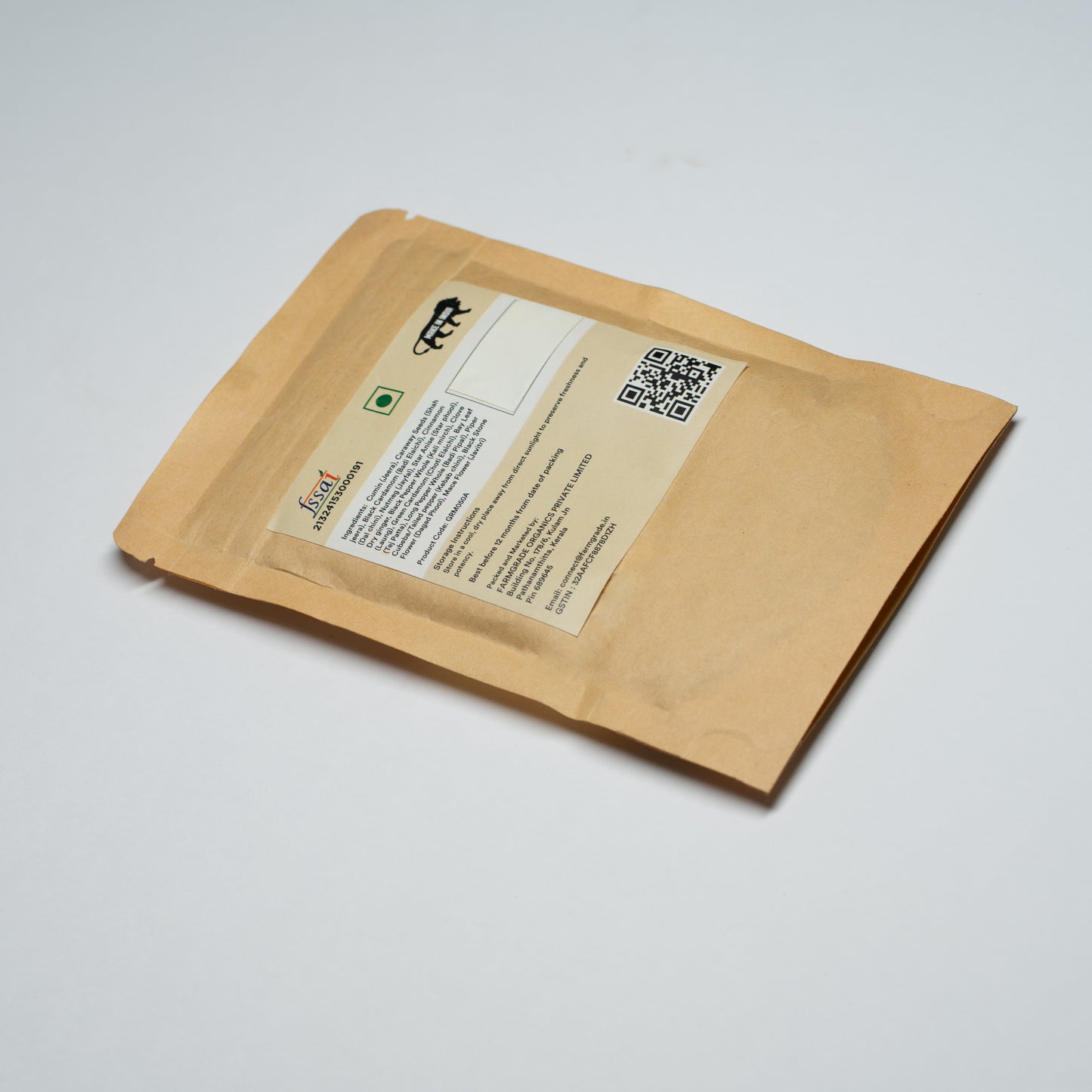
Cumin (jeera), shahi jeera (caraway), black cardamom (badi elaichi), green cardamom (choti elaichi), cinnamon (dalchini), nutmeg (jayfal), mace (javitri), star anise (star phool), dry ginger (sonth), black pepper (kali mirch), long pepper (pippali / badi pipal), cubeb pepper (kebab chini), cloves (laung), bay leaf (tej patta), and black stone flower (dagad phool).
Three of those deserve a closer look — because they're the reason this blend tastes different from anything mass-produced.
Long pepper (pippali). An ancient Indian pepper, older in Indian cooking than black pepper itself. Warmer, sweeter, more complex than regular pepper. Most commercial blends dropped it decades ago because it costs more.
Cubeb pepper (kebab chini). A small, tailed pepper from the same family, with a piney, camphor-like top note. Traditional in classical Awadhi and Mughlai cooking; almost extinct from modern garam masalas.
Black stone flower (dagad phool). A lichen that grows on rocks in the Western Ghats. Raw, it smells of almost nothing. But the moment it hits hot oil, it releases a smoky, earthy aroma that's the signature of a serious Maharashtrian goda masala and the best Chettinad meat preparations. It's the reason a well-built garam masala smells different the instant it enters the pan.
Two cardamoms. Two cumins. Two peppers. Mace with nutmeg. That's how the layering works — each pair plays a different role at a different point in cooking the dish.
How we make it
Each whole spice is sourced separately from the region in India that grows it best. The spices are dry-roasted in small batches to draw out the essential oils, then stone-ground and packed straight into airtight pouches. No blending of pre-ground powders. No fillers. No salt added to bulk it up. No artificial colour.
The whole point of a premium garam masala is that it hasn't been sitting ground for six months on a warehouse shelf. Ours is made on demand.
How to use
- Add at the end. Garam masala is a finishing spice, not a base. Stir it in during the last two minutes of a curry, dal, or meat dish — or sprinkle off the heat. Long cooking burns off the very oils you paid for.
- Use less than you think. This is more concentrated than supermarket garam masala. Start with half a teaspoon per dish and scale up from there.
- Everywhere a recipe calls for garam masala — biryanis, pulaos, meat curries, dals, paneer dishes, korma, tikka masala, tandoori marinades.
- A small pinch in yogurt marinades before grilling lifts kebabs, tandoori chicken, and paneer tikka.
In the pack
Fifteen whole spices, dry-roasted and stone-ground in small batches. No fillers, no salt, no colour, no anti-caking agents.
Best within: 12 months of packing. Store airtight, away from heat and direct light.
Share